
Curses, Compromises, and Cures
A Guide to Witchcraft's Ethical Colors
Last month, after a long afternoon pulling invasive blackberry from the community garden, I stayed late. The full moon was rising, pale and heavy, and my hands were still stained green. Earlier that day someone had asked me—half joking, but not really—“So… you ever hex a landlord?” I laughed, but the question clung like burrs on my shoelaces. The air still smelled of turned earth where we’d trampled it. I kept thinking about harm, how it isn’t always sharp or dramatic. Pulling a weed is harm. Eating can be harm. Making space for one life sometimes requires ending another. So much of magic is like that—full of edges and roots tangled together, intention braided with consequence.
The Colors We Paint With
People love to sort things into tidy color-coded boxes: black magic is “bad,” white magic is “good,” grey is the messy middle. It’s a convenient shorthand, but like most shortcuts, it erases more than it reveals. But the truth is, humans live in the grey. We’re complex beings with needs, boundaries, anger, tenderness, hunger, and hope. Life itself is grey. It’s river water after spring rain, not a crystal-clear pool.
Intent matters, yes. But so does context. A protection spell cast from fear lands differently than one cast from confidence. A healing spell can cross a line if it overrides someone’s autonomy. Magic isn’t neutral—it amplifies whatever is already present. The color isn’t in the candle or the herb; it’s in the decision you make when you light the match.
So when someone says, “I only do white magic,” I usually ask, “What do you mean by that?” Not to challenge them—just to understand. Nature isn’t binary. Even the sweetest blackberry thicket has thorns. The point is to stay aware.
Why Categories Fail Us
Harm is rarely simple. I think about that a lot when I’m out scattering native seeds with one hand while uprooting invasive plants with the other. I’m helping one ecosystem re-balance itself, but I’m still ending lives to do it. Necessary harm. Contextual harm. Harm held with care.
Magic works like that too. Maybe you cast a spell to create peace in your home, and without meaning to, someone else loses their comfort. Maybe you speak a boundary spell, and another person feels shut out. Every action has ripples. Magic doesn’t remove that—it just makes the ripples travel farther.
When I was younger, I thought the goal was “never cause harm.” I carried that like a weight for a long time. Now I think it’s about being aware of the harm you might cause, and choosing what you can live with. To act with clear intention, knowing when we are protecting ourselves, and when we are lashing out. The difference between survival and selfishness can be a thin, trembling line—like spider silk in morning light. And just as easy to break if you’re not paying attention.
The land teaches this: growth and decay are inseparable. Something always feeds something else.

Honoring Roots
Cultural Respect in Magic

In my family, we were taught that magic doesn’t start with the spell. It starts with knowing who your people are and where your hands are reaching from. I remember sitting at my grandmother’s kitchen table while she braided my hair, the smell of coffee brewing for the ancestor altar beside us, and she’d say, “Power without memory is just taking. Power with memory is offering.” That stuck with me.
When we talk about cultural respect in magic, we’re talking about honoring the roots of the practices we use. Hoodoo, for example, is African American folk magic created under enslavement, shaped by survival, land-based herb knowledge, Bible work, and lineage. That history matters. You can use bay leaves for wishes or set a glass of water for remembrance, those are open practices, but some things are closed, tied to families, initiations, or communities who carry those traditions. That’s not about elitism. That’s about care.
A simple way to move ethically is to always ask: Where did this come from? Who does it belong to? Is this open? If the answer isn’t clear, step back with respect. Magic’s in your roots – start there. Let your practice grow from what feeds you, not from what you take. Respect the source, always.
The Grey Path
Most of us live here—in the misty, grey fog of the middle ground. Not blinding light. Not total shadow. It’s where protection and compassion overlap; the circle you cast in self-defense, or the jar spell that keeps a manipulative boss off your back. The grey path isn’t indecision. It’s deliberation.
Binding and hexing often get lumped together, but they’re different tools. One is a shield, one is a strike. A binding says, “Your harm stops here.” A hex says, “Feel the consequences of what you’ve done.” There are moments when both are understandable. What matters is why you choose one—or whether you choose either.
When I cast, I try to pause first. I stand barefoot if I can—backyard, park, even just the balcony where the city air smells faintly of wet concrete. I ask:
Is this necessary?
Is it mine to do?
Can I live with the outcome?
And if you go forward, you do so with full ownership of the outcome.
Every spell has ripples. And you will live with them—not some abstract karmic force, but you. Your nervous system. Your relationships. Your future self.
The grey path is not about being careful to the point of paralysis. It’s about taking responsibility for your magic the same way you take responsibility for your footsteps on the land. You tread knowing the earth remembers.

When Protection Becomes Control
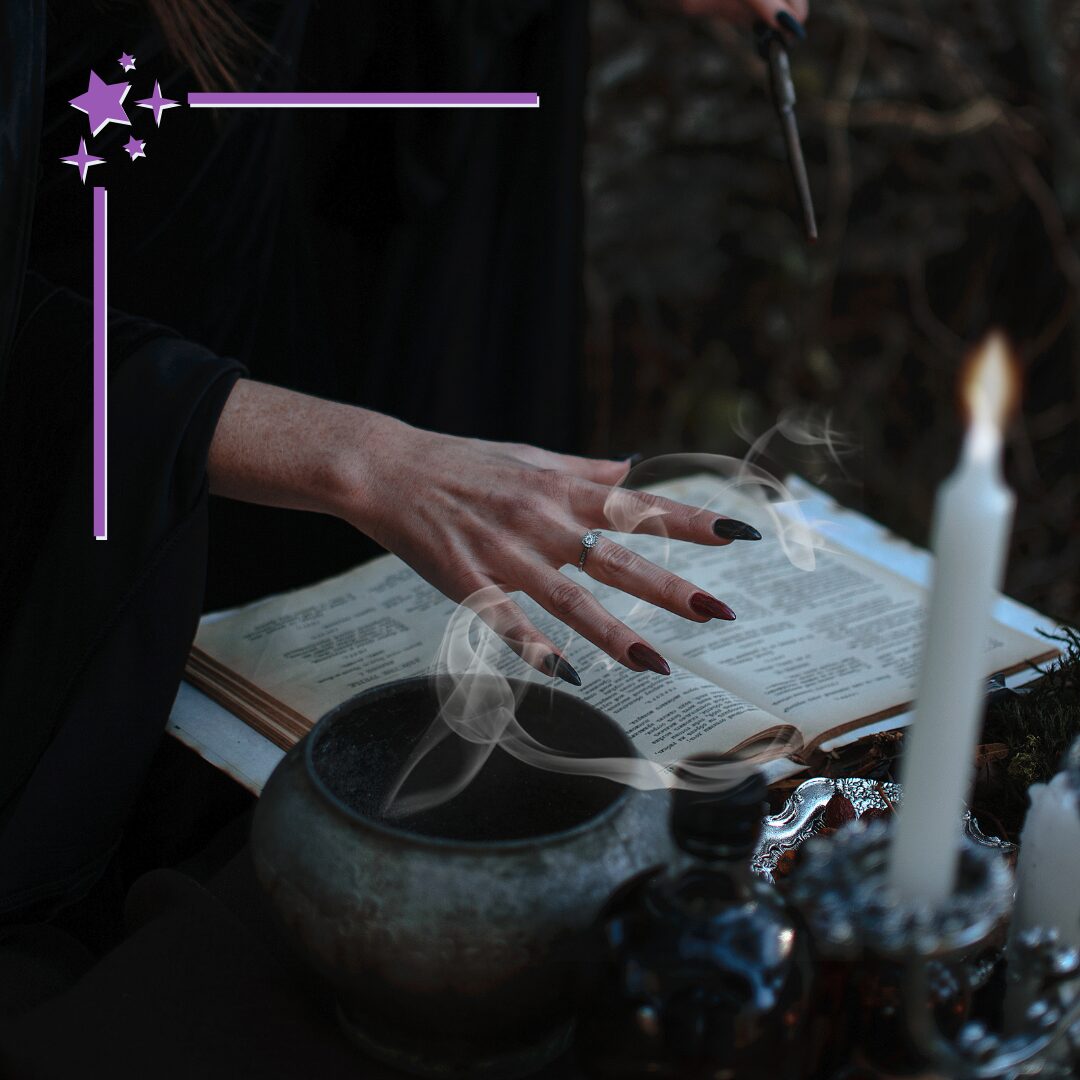
Why do we do this thing where we start out just trying to protect ourselves and then, somehow, we end up trying to steer other people like they’re puppets on strings? I caught myself almost doing it last month, actually. I was wiping down the counter, humming to myself as I do when I’m thinking too hard, and I realized the “protection jar” I was planning was really a “make them stop treating me like that” jar. Subtle difference. Big deal.
Protection magic is about boundaries. Wards, salt, rosemary smoke, a line drawn at your door that says: “This is my space. You don’t get to bring crud in here.” Influence magic, though? That’s when we start trying to change someone else’s behavior without their consent. Even if they’re being a jerk. Even if you feel justified. It’s still nudging their will, not yours.
And look, I get why the line blurs. We get tired. We get hurt. We want things to be easier. But that means working on your house, your boundaries.
Common Ethical Crossroads
Intentions turn into interference when we stop listening. Even healing, offered without consent, can become a kind of soft harm. If you’re unsure, ask. Or work with broader, non-directive blessings. Ground and center yourself first. Protect, don’t control.
Working Magic for Others Without Permission
Even healing can become a soft form of harm if it overrides someone’s agency. If you’re unsure, offer blessings that don’t interfere: May they receive what they most need. Work from your side of the relationship.
Defensive Magic — Where’s the Line?
Protection is a birthright. You deserve to feel safe. But defense can quietly stretch into offense when fear or anger takes the lead. Pause before casting: Am I shielding myself, or trying to control someone else’s behavior? That answer tells you where the line is.
Love Magic and Consent
Love is wild magic. It needs room to move. Targeting one specific person pins that wildness down, and that’s where intention can twist into manipulation. Instead, call in the kind of love that meets you where you are and grows with you. Let love choose you back.
Hexing vs. Binding
A binding is a boundary. A hex is a reckoning. Ask yourself: Am I protecting, or am I punishing? Boundaries can be sacred. Retaliation burns hot and lingers in the body. If you step into that fire, be sure you know how to tend the heat.
When Everyone Has Different Rules
wait so I just realized something while I was literally wiping down the counter at work (like apron still on, phone buzzing in my pocket) – everyone has totally different “witch ethics” rules and it’s honestly kinda melting my brain?? 🌙💀
like one person on TikTok is like NEVER hex and then the next video is like “here’s my petty hex starter kit ✨✨” and then someone on Discord is like “only do positive magic” and then someone else is doing like full on baneful protection work and I’m over here with my tarot cards spread on the floor like… so what’s the truth??
and I don’t mean it in a “someone is lying” way. I think it’s more like… witchcraft is so personal. like your background, your trauma, your culture, your sense of justice – all of that shapes your practice. and there’s no “Witch Commandments” carved into stone tablets somewhere (which honestly would be kind of slay but whatever).
but also?? the lack of rules is kinda scary. like what if I mess up? what if I accidentally do harm?? (baby witch panic ensues 🫠)
so I’m trying this new approach: ask why, not just what. like if someone says “don’t do ___” I’m learning to ask where that comes from.
anyway. is anyone else feeling this??
Stay witchy 🌙🪄
When Destruction Serves Creation
I was breaking down a warped gate hinge last Tuesday. Had to heat it, beat it, and basically destroy the damn thing before I could reforge it straight. My kid’s watching and asks, “Isn’t that a waste?” And I tell him: sometimes you break what’s wrong so you can rebuild it right.
Not all destruction is the same. There’s wasteful destruction: anger with no direction, smashing just because you’re mad. That’s like overheating steel until it crumbles. Useless. Leaves you with nothing but slag and regret.
Then there’s destruction with purpose. The forge fire. The heat that changes metal. You don’t get a blade without burning the raw stock first. You don’t get growth without endings. You don’t get protection magic without drawing a damn boundary.
Cursing? Hexing? Yeah, I’ll say it: sometimes necessary. But it’s not a hobby. It’s not for venting because someone annoyed you at work. It’s serious heat. You only light that fire when the harm being done demands intervention. And you stand by the consequences.
Building Your Own Ethical Compass
You don’t need permission to connect ethically with the earth or with magic. You just need reflection and responsibility.
Here are questions I usually ask myself before any spell:
What am I hoping will happen?
Who might this affect, directly or indirectly?
Have I tried mundane solutions first?
Am I willing to accept any consequences?
Your framework might look different. Some witches follow the Threefold Law, others a personal code of balance. Some trust intuition, others logic. The point isn’t to copy someone else’s ethics—it’s to cultivate your own and revisit them often.
Ethics aren’t a destination—they’re a practice. There’s no perfect here. Just presence.

What The Years Have Taught Me About Harm
This morning, while I was checking the herb beds, the oregano released that sharp green scent and the hens were fussing in their usual way. Ordinary things, grounding things. But they’re the moments that taught me the truth about harm more than any book or tidy teaching ever did.
When I was young, I treated “harm none” like a border fence: step across it and you’ve failed. It felt comforting to imagine we could move through life without causing hurt. Then cancer arrived, and with it the kind of choices that didn’t have gentle answers. And there was the rooster who bloodied every hen he shared space with. In the end, mercy looked like an ending. I didn’t feel wise. I felt heartbroken. But harm had already happened—my choice was about minimizing further suffering, not keeping my hands clean.
So I say this now: “harm none” is not a rule. It’s a question you ask constantly. Who is harmed if I act? Who is harmed if I don’t? What can be protected? Where is the least harm? Boundaries can feel harsh, but they protect the soft places. Pulling weeds hurts the weeds, but saves the tomatoes. Healing sometimes harms what refuses to let go.
When I’m unsure, I pause. I breathe. I ask trusted counsel. I step outside so the wind through the branches overhead can clear my thinking a bit. I look for the option that carries the least damage and the most integrity. And then I accept that no choice is ever perfectly clean.
We learn as we go—hands in the soil, radio humming in the kitchen, lavender drying by the window—trying to do the most good with the lives we’ve been given.
Closing
Ethics in magic isn’t about choosing sides of a coin. Or about sorting yourself into black, white, or grey—as if a life could ever stay one color. It’s about listening—to yourself, to others, to the land. It’s asking, softly and consistently: What am I hoping will happen? It’s realizing that sometimes the most powerful spell is restraint, and sometimes it’s fierce defense.
The best altar I know is the one outside. Bare feet on soil or sand or cracked city sidewalk. Wind moving through cedar branches. The smell of rain just before it arrives. When I stand there, I remember I’m part of something living, shifting, bigger than my fears.
Most of us walk in the grey.
And that’s not a compromise—it’s a practice.